Showing posts with label Resources. Show all posts

Wednesday, 1 August 2012

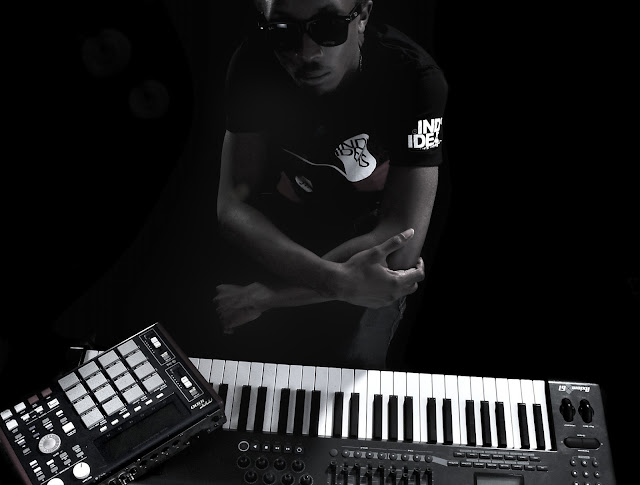
Kevin Provoke : Producer Profile


It is not every day that we get to hear a refreshing new sound, one that captures our imagination. About 4 months ago some one sent me a Youtube link to a then unknown female rapper doing a cypher. The link was to XTactic's Prep track, and I blown away by her amazing delivery as well as the throw-back old school hip hop track; I made it my goal to find the mysterious behind the scenes producer that had conjured up the awesome beat and launched the career of Kenya’s first Sony/BMG’s signing. It is after 2 months of searching that I finally got a chance to chat with Kevin Provoke, his buzzy electro – hop signature tracks are now a mainstay, featuring prominently on radio. The most shocking thing I discovered from the interview is that he is partially deaf.. go figure!!

Here’s a run down of that interview

Brief history as producer
I began production in 2005 after 2 years out of high school. I credit Ambrose Akwabi of the production duo Mandu Digital, who allowed me to hang out with him and follow him around; he gave me my first insights into what the job of music producer entails. My journey into music production is also one of frustration that I encountered as young rapper in group called Vaksin, in that we couldn't find a producer who understood the sound we were looking for and also the few recording studios that existed  [ Ed note: RK’s Ogopa, Ennovator, Blu Zebra]  were very expensive and we could barely afford to pay for studio time. I actually remember the first beat I ever recorded on was from Ennovator but he never even got to know that or even meet us or listen to the song...... [ Erm.. Ed note.. !] As fate would have it I decided to produce the group, but that also hit a wall because soon after that, everyone decided to pursue other non-musical interests and I was left alone. In 2007 I saved up money for my fees to go to Popakademie Music school In Mannheim, Germany, where I got a diploma in sound engineering and music production, then got back to Kenya towards the end of 2008. From then on I worked as a ghost producer/writer [un-credited of course] for many producers until when I decided about to it alone and opened my own production facility and studio.  

What is in your tool box (hardware software, mics, monitors, DAW) and why
The core part of my studio is built around Presonus, equipment and that is based on the character of the sound that I feel it gives me. Presonus equipment can now be bought locally and that for me is also another added advantage. The Presonus Fire studio [6*10 is my audio interface of choice, I don't do a lot of Multitrack recordings so this sound-card serves me brilliantly. The mic pre’s on the FireStudio are pretty decent and the mic goes directly into the card without passing through any analogue desk. The award winning Presonus Eureka Channel strip handles any external compression, I find this works wonderfully as it contains a fully-fledged compressor, 3-Band EQ, and takes both Mic and Instrument inputs. My microphone arsenal comprises of a Sterling Audio mic on female vocalists and a Rode NT1 a general mic, as  an industry standard one can never go wrong with this microphone. My monitors of choice are the KRK v88s for the dynamic range and but I soon will be upgrading to KRK VXT. LogicPro Studio 9 is my workstation  of choice and everything I do , from composition to final mix and mastering is handled within the box. I use an MPC 1000 for drum programming.

What can't you do without and why ( hardware  and software)..
I can't do without logic pro 9 as well as the KRK v88 monitors, which give me a good bottom heavy mix that is clean, I also find that I am able to listen to them for extended periods without strain or ear fatigue.

Walk us through your work process from brain fart (rough idea) to finished song
I usually take time before I working on a song, but also a lot of also depends on the artist am working on the song with; I love interaction with artists as it allows me to get in to their space and thus hypes up my creative juices. For me production is a two way street, I expect a lot feedback from the artist and incorporate a lot of their ideas into the song. I hardly just make beats for grabs unless it's for something specific and even if that were the case, I would do it from scratch, basically making the skeleton track in 20 to 30 mins. If an artist knows what we they want, a vocal session can be completed in 2-3hrs.

Specific Production Cuts: Xtactic’- Prep Track
Prep track was unplanned for and I remember I had a beat I sampled in my vault of beats; Xtactic came to the studio on 24th of December when she lay all her vocals. The mix was done after the video ad been recorded, and I actually, did it on my laptop and headphones since I was enroute to Nanyuki! And I need to do it quickly.

Interface of being a producer who can engineer or engineer who can produce. ?
 Not all engineers can produce and not all producers can engineer. I am fortunate enough to be able to do both well.

Music Business; Running a production Company in Africa: how do you do it. Highs or Lows?
It's quite challenging to set up a record company requires a lot of capital and reliable marketing strategies...on the other end music record labels can make a lot coz African artists have untapped talent and work hard.

How do you protect your intellectual Property?
 Once I song is done I make sure it is copyrighted at the Kenya Copyright Board

Selected Discography:
(List of Selected Production Work)


      Xtatic-preptrack, 

·      provoke ft annette- imperfections,


·      Bamzigi-light it up,
·      lyra aoko - colours of life,
·      wendy kimani-rumour,
·      plan b-playground,cannibal-i wish,
·      Nonini-pole pole,
·      legend(basically all his solo tracks),
·     
     Project ape with Eminem, Alicia keys, Kenny Young, Chipmunk and ts-1 ,


By RT for TheMtaaBlog © 2012

Wednesday, 23 February 2011

Live Sound: All That Jazz with Aaron Rimbui


Date: 3rd Feb 2011

Aaron Rimbui is an acclaimed Jazz pianist from Kenya who together with his band hold a bi-monthly jazz concert for music enthusiasts in Nairobi. His music can be broadly described as funky/pop jazz with a mix of classical elements, all together a very entertaining act. This month, the band was made up of Aaron Rimbui on keyboards, Issac Mugunda on guitars, Asaph Uzelee on Bass and George on Drums.

The Space 
The Louis Leakey Auditorium is a nice place, purpose built for conferences and small concerts or theatrical events. It has a seating capacity of about 350, inclined from the entrance to the stage. The stage is not too large (about 35 by 15 meters) with really good in house lighting as well as proper acoustic treatment (i.e., the roof and walls) it is one of the more easier venues to do sound in. looks and feels great.


Equipment
Our back line was rather simple, Aaron was placed at the centre of the stage and he used a Yamaha S90 XS as his primary keyboard as well as a  Korg MicroKorg Vocoder that was small enough to placed on top of his keyboard. He also had a macaudio monitor on either side of him. Issac used a roland JC-120 amplifire with 2 12” speakers in it, pretty simple and standard. He used his digi-tech guitar FX. Asaph used an old Peavey bass amp (make and model not worth checking up) it had 4 12” cones, one of which was torn, which gave us a problem (I shall address a bit later on). Issac and Asaph shared one macaudio monitor. George used a Yamaha Custom Kit, standard piece kit with 2 crash symbols and one ride. We micd it with a standard Shure drum mic set, including SM 57’s for the snare and hi hat. He also had one MacAudio stage monitor to himself. We also had 2 Shure wireless mics, one for Aaron and the other for the guest performer/singer (in this case Kanji Mbugua & Eric Wainaina) this mic was positioned on Aaron's left hand side with a MacAudio monitor assigned to it.

For our FOH set up we had 2 DnB C-Series top and mid range on either side, as well as a DnB subs on either side. These were set up on both ends of the stage. Our main desk was the 48 channel Yamaha M7CL Digital mixer. And that’s it! Or so we think…

On the desk

The Yamaha digital mixer is very versatile and might seem complex at first. I will walk you through it. It is also important to note that the kind of power we were dealing with (FOH) was way more than needed, but who’s complaining.

Our drums took up channel 1-8 (Kick, snare, hi-ht, tom1-3, overhead L and R), channel 9 was bass, 10 guitar (both DI), 11-12 Yamaha keyboard (LR), 13-14 MicroKorg vocoder (LR), 15 and 16 were the wireless mics. Make sense? Good.
Now the M7CL allows you to have up to 12 independent mixes other than your stereo out, (which was our FOH mix) and a mono out. One the monitors on stage were fed through 4 mixes. I.e., mix 1 for Aarons monitors, mix 2 for the monitor serving the Bas and lead guitarist, mix 3 for drum monitor and mix 4 for the guest vocalist monitor.

Testing …one…two...three…


Learning Points and Notes
Now it was a pretty straight forward set up but there were a few problems to deal with.

1. Main FOH mixer position. The hall provides a sound booth at the back but the space cut out for the engineer to see and hear is too small. So we had to move our mixing position into the hall. With no space in the middle we had to place the mixer on the back right side of the hall. A much better reference point, but the sound there was slightly muddy and bassy as compared to the middle of the hall.
Solution: there was not much we could do to move positions, so a thorough sound check was needed. We would keep referencing our mix by going to the middle of the room and this helped us determine what worked.

2. Bass guitar. The direct out of the bass amp was not too great, we had a real deep and muddy sound even after a heavy low cut on that channel. This would not help for the kind of sound we were trying to achieve.
Solution: believe it or not, since we did not want the extra hustle of mic-ing the guitar amps (which would have been the best solution), I re-wired the di box so that the feed coming to the mixer was directly from the bass guitar.

3. Hum…Buzzz
because the gig was not s massive, the sound company did not feel the need to come with their generator, which meant we would be getting power from the building. The electrician did not phase it correctly and so we were stuck with being on the same line as the house light. This is a major problem usually.
Solution: the di-boxes helped with the line instrument, lifting the ground. But our mics did not escape the buzz! Luckily there was not o much singing or talking, but when there was it drowned the buss. I must say a general low cut on all the mics is essential especially when using subs. It can also heal this problem slightly.

4. Vocoder
one as to be very careful when using this live, because the vocoder mic isn’t anything special. It picks up pops and can feedback all over the place.
Solution: hard eq-ing helped to level the sound as well as compression that the M7CL had and riding the fader. A slight low and hi cuts o your working with a bit of a n ‘n’ shape on the equalization. But subtractive mixing had to be done from time to time.

5. Drums

there were not to many issues here, just need to make sure you get your eq right especially on your kick and toms. This is usually dependant on ones preference. But basically you want the kick not to be too bassy for this kind of music; with some good compression it also gives the bass guitar room on the lower frequencies. The overhead mics need to be placed correctly and a hard low cut placed on both (a well as hard pan LR) everything except the kick was sent to a slight hall reverb that the MC& provides as well. This gave the drums a really tight almost produced sound with a punch kick right under them.

Once the monitor and FOH mixes mixes were complete it was time to tone down. Now most of the sound was absorbed by the over capacity crowd but remember with a system this powerful it is easy to go overboard. Its not a hip-hop concert and not really a classical one either, so finding a comfortable level is important. Referencing the sound from different areas of the hall (from right in the front row till the back near the exit) will help you get a better idea of what’s happening as the band plays during sound check.

Finally 

The M7CL also allowed me to apply a 24 band eq on the main mix. Now this is a really great tool but unfortunately does more harm than good to an overall mix if its tweaked even fractionally wrong.
Everything from 25 Hz-190 Hz needed to be dropped to get rid of the low rumble that would be unwanted in this kind of setting (especially with really powerful subs). Everything else pretty much remained flat except for a slight nudge at the 2k-6k regions for clarity in the mids. Thereafter any ‘tingy’ sounds on the highs that could be a bit irritating was brought down on the eq graph of individual instruments (this can be caused especially by the drum hi-hat and overhead mic) as well as the guitar sometimes (depending on what effects he was using) so a high shelve on that channel was useful, would play around with it from time to time. But we pretty much achieved that warm George Benson sound with the guitars.


Last note: People have a habit of either mixing out the keyboard entirely by making it to light and tone-y, or making it too muddy and annoying. So finding a good balance is helpful especially when it’s the main ingredient of the sound you are trying to achieve.
*exact eq settings etc will always depend on where you are and the dynamics of the space


Crew

Jaaz Odongo- Monitor and FOH


By Jaaz Odongo for TheMtaaBlog Copyright 2011 

Live Sound: Tusker Project Fame 4

Tusker Project fame 4 was probably the most talked about music- television event in East Africa's history; hate it or love it, TPF4 was an inescapable popular culture marker. Every weekend, life between 7.30 -9pm would literally come to a stand still for the 10weeks the show was on air; the season finale won by Davis from Uganda was reportedly watched by an estimated 10million people in the East African region!


From an audio perspective the challenge for the fourth season was to make it bigger than any other seasons, musically. This meant that the in house band came earlier in the season; there were more guest acts with more complicated switchovers and acts. In addition to this, 90% of the guest performers had to perform with a live band (any one who has followed the show’s history will know why this was such a big deal and in my opinion as to why the show this time was very good)
 And as such couple of changes had to be made which played a huge impact on how the show was heard both at home (TV) and in the Dome
I was given the challenge to deliver 5 discreet mixes during every live show i.e.
  • 1.          Stereo Band mix for broadcast (later summed to a mono mix because Citizen TV like all other free to air TV stations still broadcast a mono audio signal and are not keen to change well done dinosaurs!) 
  • 2.         Front of House  Mix(F.O.H) for the Dome
  • 3.          MD Aaron’s mix
  • 4.         Band mix
  • 5.         Two monitor mixes for contestants/ Guest Performer’s on Stage


The ideal situation was to have had a stage split that allowed all mixes to be handled by different mixer and engineer but then again TIA (This is Africa).
Now this herculean task was made easier by one nifty gadget that the good people at Frame24 SA (thanks Tiens and Eugene) brought i.e. The LS932 Yamaha Digital Console. Any one who has used Live Gig’s Yamaha MCL7 or Yamaha PMD5 would find their way around this console in minutes as it is described as the baby brother of the larger format mixing consoles. The LS932 allowed me create all the mixes I needed and additional sub mixes and routing of effects. I had no need for outboard for this show as my LS32 allowed for 2 dynamics inserts per channel, multiple effects routing in additional to parametric and graphic EQ for the all master outs.
I had worked on TPF4 before but never in this capacity (F.O.H Live Sound Engineer) so it was definitely new ground. Another challenge was design of the dome and F.O.H position. 

This is how we did it (get your pens and papers kids)

Gear List
1.          15 Sennheiser Mics  (SKM300) + 6 A 1031-UFlap antennae
2.         Shure Drum Kit PGDMK6 mics- 
3.          5 Behringer ULTRA-DI DI100
4.         Yamaha LS932 Digital Mixing console
5.          Samson 50M 24 by 8* 8 multicore snake
6.         Samson Power Amplifiers: SX 2400, SX 3200, SX 2600
7.          Assorted Wharfdale Monitors and Speakers
Band
                     I.         Yamaha Gig Maker Drum Kit
                  II.         Yamaha ES8 Keyboard                                                      (Aarons)
               III.         Bass Amp - peavey max 115
              IV.         Guitar Amp - peavey bandit 112
                 V.         Guitar Pedal – Digitech RP500                                     (Izzo Muganda’s)
              VI.         yamaha mg12xc Mixer
           VII.         Warfdale evp x15 pm - powered monitor 2
        VIII.         evp 12m  2
               IX.         Motif ex 8

Routing
The Ls932 handled all the routing; all mics old had a low cut, some compression and EQ and all performers' mics were patched into a reverb and/or delay; pity that the effect did not get broadcast. By the end of the Season when I was more comfortable with the console almost all signal patched in to the LS932 was going through some master buss compression,EQ and effect. I also really appreciated the tap tempo feature, because that I could assign it to any of my delays, which added extra spice to the performances
Below is the Channel Input List into the LS932
 1-10               -Band Channels (Drums, Bass, Electric and Acoustic Guitars)
11                    - VT
12                    - MCR playback
13                    - Mitch
14                   -Sheila
15-17             - Judges
18                   - Faculty
19-28             -Contestants/ Performers
29                    - Mc
Master Output Routing
1-2- Band Only
3- Front Monitor
4. Back Monitors
5. Aaron’s Mix
6. Band  mix
7. Delay Master
8. Long Reverb Master
9. Short Reverb Master
10-11 Reference Recording Stereo  to M-Audio Fast Track Pro

14. Subs
15-16- F.O.H stereo mix

Learning Points and Notes
1. Light and Sound MUST have separate generators and their cabling must be routed way from each other. It a huge source of ghost buzzes and hums. 
2. Battery checks (for mics and DIs) 30 mins before a show are mandatory...a lot of mics tend to die when the biggest act is on stage or when the MC has cracked his best joke yet.
3. The strongest link to any music for live TV production is the communication between backstage, stagehands and F.O.H. If there's no teamwork and clear responsibility lines between this guys then sit back and wait for disaster
4. There's nothing as too much rehearsal and proper practice. ( I now agree with you, Heidi)
5. A script can save your life and that of a show.
6. Always make sure the antennae are working. No one ever remembers that RF interference and irregular antennae placement can lead to dropped mic signals or even to complete death microphones that were previously working
7. Always record whatever your sending out (mixes, broadcast etc) as they make great reference points for your work, in addition to being irrefutable proof for solving any audio fidelty disputes
8. Your average "sound engineer" from any Kenyan TV station is an ex KBC electrician from Kenya Poly who wears a white lab-coat or safari khaki waist-coat with many pockets and carries a pliers........(kill me now.)
9. Some one somewhere will inevitably drop the ball and cause a crisis. Be calm.  Trouble Shooting, Teamwork and delegation will solve it in minutes.                  
10. The true test of good work is; if no one remembers to give you a credit for great engineering. As a rule of thumb the audience and client will only remember the engineer if there were "technical problems".
11. Remember TIA: THIS IS AFRICA; make it work with what you have; demanding for a Digico D5 and $400 DIs is not clever… as no one has the budget; but also agreeing to deliver 15 mixes with Mackie 1202 mixer is could be considered as the height of engineering folly
By Tim Rimbui for TheMtaaBlog Copyright 2011


 Crew
Director: Heidi Ulys
Producer: Matthew gray
F.O.H Dome: Tim Rimbui 
Assistant F.O.H: Moses Onyango
Broadcast Mix: Martin Makasi and Tim Rimbui
System Tech: Eugene Koetze
Assistant System Tech: Brian Marende
Band Tech: Joe Were
Runners: Martin, Audi, Geideon, Lawi,Sharon, Lucy
Equipment and Backline Provided By: Frame 24- SA
            LiveGigs
            EnnovatorMusic
           Joe Were